Greece is heading down the road of austerity, now selling off it's land and assets to pay their creditors. Literally the beautiful beaches of Greece are for sale.
Prosecutors acknowledged that there were significant credibility issues with the hotel housekeeper who accused Mr. Strauss-Kahn of trying to rape her in May. In a brief hearing at State Supreme Court in Manhattan, prosecutors did not oppose his release; the judge then freed Mr. Strauss-Kahn on his own recognizance.
The mountains look on Marathon - / And Marathon looks on the sea; / And musing there an hour alone, / I dreamed that Greece might yet be free. - Lord Byron
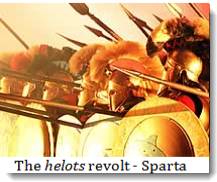
The Greek parliament voted to approve this week what might justly be titled “The Debt Enslavement Act of 2011”. Under this act, everyone in Greece gets to be a helot, and how bad could that be? It’s not like the old days. In ancient Greece the youth of Sparta participated every autumn in the Krypteia, a sort of military training exercise in which Spartans would hunt down and kill helots without fear of legal reprisal. The helots were Greeks too, just the wrong kind of Greeks – lower class, servile, tied to the land. Slaves, in effect.
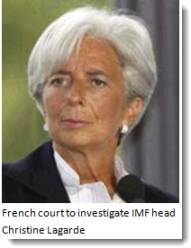
Modern day slaves aren’t tied to the land anymore – they are tied to their bank. So are governments, for that matter. How often have you read in the past few weeks that unimaginable economic consequences await us if Greece defaults? Angela Merkel said so. So did Nicolas Sarkozy, and now the new IMF head, Christine Lagarde, has said that the Greek opposition party needs to unite with the majority Socialist party to approve new tough austerity measures for the country. If they do, the IMF, the European Union, and the European Central Bank will release the last tranche of a previously-agreed loan. These three noble institutions, called “the Troika” by the press, are basically telling Greece “We are going to default on our loan commitments to you if you don’t deliver even more cutbacks, tax increases, asset sales, and unemployment than you previously promised.” The Troika, no doubt, does not enjoy trafficking in pain and suffering on a national scale, but apparently it is the only collateral they can get. The irony is, if Greece agrees to deliver more collateral – maybe we should call it collateral damage – they don’t really get any money. It just passes through Greece straight to the banks.
The International Monetary Fund (IMF) made an embarrassing error just two days before the start of the Libyan people's revolution on February 17. This quote from an IMF country study appeared in a previous article: "The outlook for Libya’s economy remains favorable." IMF Feb 15This advice was 180 degrees off target. The Libyan economy has ceased functioning as protests and popular demands imploded the Gaddafi regime. (Image)
Further investigation unearthed a specific pattern of positive IMF endorsements for each of the nations experiencing popular uprisings that are sweeping the region. When the IMF blesses a nation's progress for conforming to the economic policies underlying globalism, watch out! There is a popular rebellion in the wings.
Well, in response to the demand the G-20 confront currency re-evaulation, the G-20 gave China and Brazil more power.
More than 6 percent of IMF voting rights will be reallocated to countries such as China, while Europe will give up two board seats, G-20 finance ministers said yesterday after meeting in Gyeongju, South Korea. They also assigned the Washington-based fund a role in monitoring global trade imbalances and exchange rates.
Great, the biggest currency manipulator now has more power in the IMF, plus one of the biggest offshore outsourcing destination countries now have board seats.
After the changes take effect, the fund’s 10 biggest shareholders will comprise the U.S., Japan, four major European economies and Brazil, Russia, India and China. The IMF will have 24 board seats.
From International Business Times, that ain't too swank, it implies the Asian countries, particularly China, India, can act as a block, in unison.
If the yuan isn’t stable, it will bring disaster to China and the world. If we increase the yuan by 20 percent-40 percent as some people are calling for, many of our factories will shut down and society will be in turmoil. If China’s economy goes down, it’s not good for the world economy.
This is China Premier Wen Jiabao, as quoted by Bloomberg News.
Get that? The United States should continue to export jobs to China as some sort of global social program. We should continue to give the Chinese people our jobs so they won't raise hell and revolt. We should allow China to continue to manipulate it's currency, capturing global manufacturing capabilities to keep the Chinese government in power. Wow. Maybe we should import Chinese potential social unrest, for the United States policies are stiffing the U.S. worker and the cries from the Populist are a muted whimper.
Jiabao also chastised the EU for joining the United States in demanding China re-evaluate their currency and blamed the United States for currency fluctuations. Businessweek:
Europe shouldn’t join the choir to press China to allow more yuan appreciation. The euro had a big fluctuation recently. It’s not because of yuan but the dollars. We shouldn’t be blamed for it; if there’s someone to be questioned, it should be the U.S.
In an article several months ago in the UK's Telegraph, the sovereign credit default swap market made the news. Until now, not that much was made of the sovereign CDSes; in fact, many didn't even realize the existence, and contagion, of such a market.
The IMF has been making a lot of noise recently, but their biggest move almost managed to slip through completely unnoticed.
The Executive Board of the International Monetary Fund (IMF) today approved a ten-fold expansion of the Fund’s New Arrangements to Borrow (NAB) and the transformation of the Fund’s premier standing credit arrangement into a more flexible and effective tool of crisis management. The NAB will be increased by SDR 333.5 billion (about US$500 billion) to SDR 367.5 billion (about US$550 billion), representing a major increase in the resources available for the Fund’s lending to its members.
Recent comments