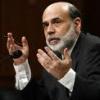
We can’t wait until unemployment is where we’d like it to be” or inflation gets “out of control” to tighten credit
The above is a quote from Federal Reserve Chair Ben Bernanke.
Gets worse, Bernanke believes the economy will not dip into another recession, yet of course, unemployment will remain at high levels.
While the Fed will raise interest rates from a record low before the economy returns to “full employment,” Bernanke said officials don’t know when that process will start. The banking system isn’t fully healthy and lenders are “cautious” in providing credit, he said.
“The unemployment rate is still going to be high for a while, and that means that a lot of people are going to be under financial stress,” Bernanke said at the event, part of a dinner hosted by the Woodrow Wilson International Center for Scholars.
Bernanke’s stance is consistent with that of several Fed colleagues. Atlanta Fed President Dennis Lockhart said June 3 that the central bank may need to raise rates even with “unacceptable levels of unemployment,” while Eric Rosengren of the Boston Fed said last month it wouldn’t be “appropriate” to have rates close to zero with the economy at full employment.
The CBO has a new report on those nasty, toxic mortgage backed securities the Federal Reserve bought, along with a host of other crud from the financial meltdown.
A new amendment, which Senator Dodd has signed onto has been introduced by Senator Bernie Sanders. It appears we have a bait -n- switch or compromise, i.e. back room deal on auditing the Federal Reserve.
This should be a no-brainer for Economic Populist readers...
(Reuters) - It's a mystery that has puzzled even Federal Reserve Chairman Ben Bernanke: if the U.S. economy is growing rapidly, why isn't it creating jobs?
Perhaps we should send Bernanke the link to the site?
For whatever reason, the administration has not taken full advantage of its chance to shape monetary policy during the downturn. The number of open positions is a large fraction of the Federal Reserve Board, and it skews the balance of power on the Federal Open Market Committee (where monetary policy is decided) toward the regional banks. Many of the regional bank presidents are inflation hawks, more so than the Governors, so this may have affected the Fed’s policy choices.
The centerpiece will be a new tool Congress gave the central bank in October 2008: an interest rate the Fed pays banks on money they leave on reserve at the central bank. Known as "interest on excess reserves," this rate is now 0.25%.
So, the Fed pays banks interest on money lent to the Fed from the banks.
This explains why the dollar dropped so much yesterday.
(Reuters) - The Federal Reserve is discussing re-entering the mortgage-backed securities market later this year if its buying power is needed to hold down interest rates, Market News said on Tuesday in a story citing Fed officials.
The $5 trillion agency mortgage-backed securities market may weaken when last year's biggest buyer, the Federal Reserve, ends its $1.25 trillion agency MBS purchasing program at the end of the first quarter of 2010.
Fed officials, however, "are prepared to contemplate changes if need be, depending on conditions in the economy, housing finance and in financial markets more broadly," Market News said in a story written by Steven Beckner.
Federal Reserve Chair Ben Bernanke says the Housing Bubble is Regulator's Fault and the Fed had nothing to do with it:
“The best response to the housing bubble would have been regulatory, rather than monetary,” Bernanke said today in remarks to the American Economic Association’s annual meeting in Atlanta. The Fed’s efforts to constrain the bubble were “too late or were insufficient,” which means that regulatory actions “must be better and smarter,” he said.
Right o! Bernanke supported all of Alan Greenspan's cheap money policies:
Bloomberg is tallying up the Senate votes and reporting Helicopter Ben Bernanke is in by a good 66%.
Bloomberg yesterday interviewed 53 senators who aren’t on the Banking Committee, which voted 16-7 on Dec. 17 to recommend Bernanke’s nomination to the full Senate. Twenty-one lawmakers said they are inclined to vote for Bernanke, while four said they would oppose the central bank chief, giving him 37-12 support so far for a four-year term starting Feb. 1. Another 28 said they’re undecided or declined to comment.
California Democrat Dianne Feinstein and South Carolina Republican Lindsey Graham were among senators saying they’ll support Bernanke, citing his response to the financial crisis. Senators from both major parties said they expect him to be confirmed, even with at least four lawmakers trying to block or delay the nomination.
No surprise here. Federal Reserve Chair Ben Bernanke gets Senate approval for a 2nd term. Now onto the Senate floor where there are 5 holds on his confirmation. The vote was 16 to 7, with 12 Democrats and 4 Republicans voting for Bernanke.
Recent comments