What is the Volcker rule? The headlines in the press describe a nebulously defined financial regulation as being the second coming of financial reform Yet the only thing clear about the Volcker rule is who it is named after, former Federal Reserve chair Paul Volcker. The Volcker rule was a last minute financial regulation rule in an attempt to stop speculative trading by Wall Street. It has been politicized, lobbied against, delayed, watered down and modified heavily.
This week in economic outrage has some real winners. Everyday there are so many injustices it is hard to keep up. Here are some cut to the chase boil downs of news and events you might have missed. As usual, corporations are running the government while the American people and labor be damned.
Wall Street is now winding their way through the swiss cheese loophole maze financial reform is. Remember credit default swaps, those deadly, bad math, bad computation derivatives which were behind the financial crisis?
It is 2013, five years after the start of a recession and two and a half years after so called financial reform legislation was passed. Yet, Too Big To Fail Banks have just gotten bigger, the financial system is still at risk and most of the disaster was buried in a mountain of bail out money.
The Federal Reserve and the Office of the Comptroller of the Currency are cutting an $8.5 billion deal against ten of the largest banks for their systematic foreclosure and loan modifications abuse which resulted in millions losing their homes. From the settlement press release.
The noise from the election machine is at 120 decibels. If you don't wear ear plugs you'll damage your hearing. Campaigns and their surrogates are misquoting statistics, rewriting history and are carpet bombing Ohio with ads and armies of campaign workers knocking at the door.
It's Friday Night! Party Time! Time to relax, put your feet up on the couch, lay back, and watch some detailed videos on economic policy! Tonight we have three videos.
The manipulation of the LIBOR scandal just keeps growing. Ever since Barclays was busted for manipulating this key critical interbank interest rate, more outrageous details keep pouring out.
Europe wants to make such evil financial dealings criminal. Yes, that's right, already manipulating a key interest rate is being classified as not criminal by this announcement.
Europe's top regulatory official intends to propose new rules that would criminalize the manipulation of benchmarks such as Libor.
The U.K. Serious Fraud Office opened a criminal probe into the attempted rigging of interest rates that led to a record fine against Barclays Plc (BARC), adding to pressure on banks already under investigation by regulators around the globe.
Supposedly the U.S. opened a criminal probe in February 2012:
Several major global banks, including Citigroup Inc, HSBC Holdings Plc, Royal Bank of Scotland Group Plc and UBS AG, have disclosed that they have been approached by authorities investigating how Libor is set.
Barclays was busted for manipulating the LIBOR. The London Interbank Offered Rate is the interest rate banks charge to lend to each other. This key interest rate sets most banking transactions, including retail. Manipulating the Libor is like being a casino with crooked roulette wheels and loaded dice.
Barclays has been fined £290m ($450m) for trying to manipulate a key bank interest rate which influences the cost of loans and mortgages.
Marcus Agius will step down from Barclays as soon as Monday, amid fallout from the bank's $453 million settlement of probe into Libor manipulation.
On Wednesday the U.K's Financial Services Authority announced to the world Barclays manipulated the Libor and was fined. Below is some of the FSA's press release:
The FSA has today announced that it has found serious failings in the sale of interest rate hedging products to some small and medium sized businesses (SMEs). We believe that this has resulted in a severe impact on a large number of these businesses. In order to provide as swift a solution to this problem as possible we have today confirmed that we have reached agreement with Barclays, HSBC, Lloyds and RBS to provide appropriate redress where mis-selling has occurred.
What a surprise, that biggest fighter against financial regulation of them all, JPMorgan Chase accrued a $2 billion dollar loss:
The $2 billion loss came from a complicated trading strategy that involved derivatives, financial instruments that derive their value from the prices of securities and other assets. JPMorgan said the derivatives trades were part of a hedge, meaning they were set up to offset potential losses on the bank’s large holdings of bonds and loans.
That loss was caused by derivatives and credit default swaps and in part due to a Value at Risk model. This is the same type of model which was part of the financial crisis and has been warned about repeatedly for not being mathematically complex enough to base one's gambling debts on. No surprise a VaR model was behind the loss.
It produced large losses even without extreme movements in the derivatives markets or underlying bond markets.


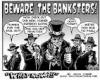 The Federal Reserve and the Office of the Comptroller of the Currency are cutting an $8.5 billion deal against ten of the largest banks for their systematic foreclosure and loan modifications abuse which resulted in millions losing their homes. From the settlement
  The noise from the election machine is at 120 decibels. If you don't wear ear plugs you'll damage your hearing. Campaigns and their surrogates are misquoting statistics, rewriting history and are carpet bombing Ohio with ads and armies of campaign workers knocking at the door.
  It's Friday Night! Party Time! Time to relax, put your feet up on the couch, lay back, and watch some detailed videos on economic policy! Tonight we have three videos.
  The manipulation of the LIBOR scandal just keeps growing. Ever since
  Barclays was busted for
  What a surprise, that biggest fighter against financial regulation of them all, JPMorgan Chase accrued a
  That loss was caused by derivatives and credit default swaps and in part due to a
Recent comments