For 66 years the Glass-Steagall act reduced the risks in the banking system. Eight years after the act was repealed, the banking system blew up threatening the international economy. US taxpayers were forced to come up with $750 billion dollars, a sum much larger than the Pentagon’s budget, in order to bail out the banks. This huge sum was insufficient to do the job. The Federal Reserve had to step in and expand its balance sheet by $4 trillion in order to protect the solvency of banks declared “too big to fail.”
In the 21st century Americans have been distracted by the hyper-expensive “war on terror.” Trillions of dollars have been added to the taxpayers’ burden and many billions of dollars in profits to the military/security complex in order to combat insignificant foreign “threats,” such as the Taliban, that remain undefeated after 15 years. All this time the financial system, working hand-in-hand with policymakers, has done more damage to Americans than terrorists could possibly inflict.
Yet another Senate report, yet another bank is busted for tax evasion. The Senate permanent subcommittee on investigations has released a report on Credit-Suisse bank detailing their systemic offshore tax evasion of U.S. funds.
Economic theory teaches that free price and profit movements ensure that capitalism produces the greatest welfare for the greatest number. Losses indicate economic activities where costs exceed the value of production, thus investment in these activities is curtailed. Profits indicate economic activities where the value of output exceeds its cost, thus investment increases. Prices indicate the relative scarcity and value of inputs and outputs, thus serving to organize production most efficiently.
Tonight's documentary is Inside Job. Made in 2010, this is probably the best documentary on the financial crisis and it also won an Academy award. It should also make your blood boil and then bubble over considering business as usual is still going on. The conflicts of interest alone exposed in this film will stun you In short it's a must see and if you have watched it already, well, see it again.
Attorney General Eric Holder, the highest law enforcement officer in the land, said he cannot prosecute the big banks because that would endanger the global economy. This is an admission the world is run by the banks and not governments or the rule of law.
It is 2013, five years after the start of a recession and two and a half years after so called financial reform legislation was passed. Yet, Too Big To Fail Banks have just gotten bigger, the financial system is still at risk and most of the disaster was buried in a mountain of bail out money.
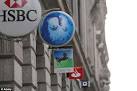
The latest fallout in the banks manipulating the LIBOR scandal were criminal charges against two UBS traders. LIBOR is a key financial rate and the Justice Department this week fined UBS $1.5 billion for rate rigging. The Japan UBS subsidiary also pleaded guilty to wire fraud.
UBS Securities Japan Co. Ltd. (UBS Japan), an investment bank, financial advisory securities firm and wholly-owned subsidiary of UBS AG, has agreed to plead guilty to felony wire fraud and admit its role in manipulating the London Interbank Offered Rate (LIBOR), a leading benchmark used in financial products and transactions around the world, Attorney General Eric Holder announced today. The criminal information, filed today in U.S. District Court in the District of Connecticut, charges UBS Japan with one count of engaging in a scheme to defraud counterparties to interest rate derivatives trades by secretly manipulating LIBOR benchmark interest rates.
Have you ever noticed that large corporations can get away with pretty much anything? Over and over again a major scandal breaks and in the end the fines are pennies on the dollar for the profits gained by these nefarious financial activities.
Banks can launder money with impunity and the consequences are a small fine in comparison to the profits made. No matter how egregious there are no criminal chargers or revoking of the bank's charter.
The British bank Standard Chartered said on Thursday that it expected to pay $330 million to settle claims by United States government agencies that it had moved hundreds of billions of dollars on behalf of Iran.



 The latest fallout in the
 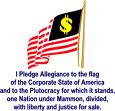 Have you ever noticed that large corporations can get away with pretty much anything? Over and over again a major scandal breaks and in the end the fines are pennies on the dollar for the profits gained by these nefarious financial activities.
Recent comments