It seems House Democrat Peter Defazio (OR-4th), really likes the Republican Jobs Plan, otherwise known as Snakes on a Plane. Watch his praise and approval below!
In about two years of blogging at TRP (and another two years’ policy-blogging elsewhere), I’ve never discussed trade. It’s not because it’s unimportant, because trade is clearly a major issue within economic policy and politics, but rather because of when I came of age politically. In 2001 student politics, the free trade vs. anti-globalization/protectionism debate seemed remarkably deadlocked and somewhat sterile. Twin camps of policy contenders required allegiance with either side, and I found myself unhappy with the analysis and debate and more drawn to questions of domestic economic policy.
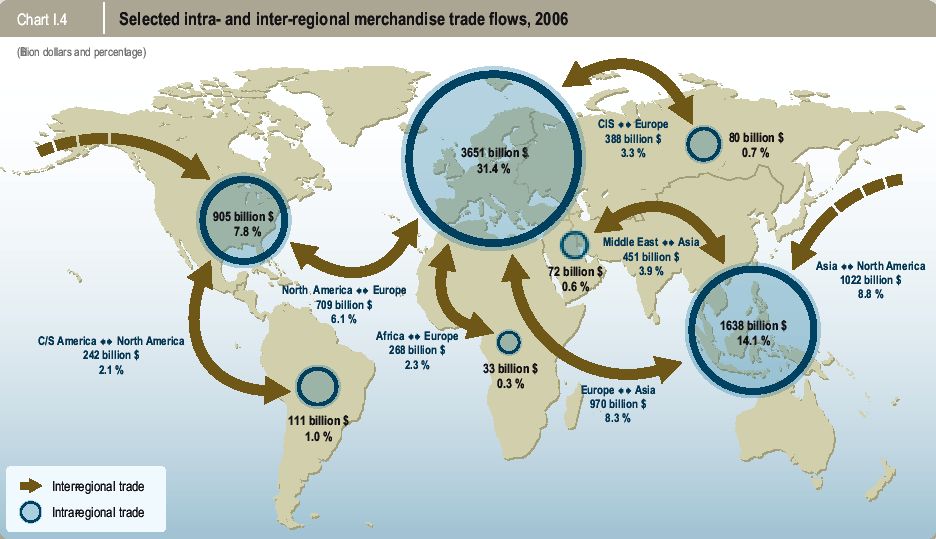
However, in the wake of the Great Recession and the increasingly-urgent need to reassess the structure of the U.S economy, I can’t avoid it any longer. The trade question isn’t the whole of our economic problems, I think it can be exaggerated in a way that obscures a more important class conflict inside nations. And yet, the global balance of trade – between Germany and the rest of Europe, between China and the U.S, and so on – is clearly out of whack.
When the first generation of historians begin their work on the Obama Administration, one of the more puzzling chapters will be the winter of 2010, when a major sea-change occurred in public policy that neither the administration nor the media were particularly eager to spend that much time trumpeting - namely, the revival of industrial policy after forty years or more beyond the pale of the Conventional Wisdom, as demonstrated by the success of the American automotive industry rescue.
While we wait for that generation of historians to get started being born, we can at least begin to learn some lessons about how and why the Big Three rescue worked when other industry bailouts have been such miserable failures.
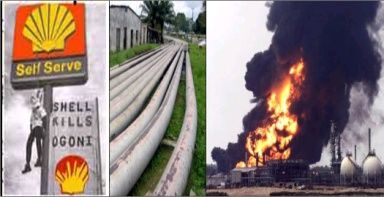
The big oil catastrophe in the Gulf of Mexico is not the first to threaten a people's way of life.
Just ask the Ogoni people from Nigeria's oil rich central Niger Delta. Their experience over decades offers a model of things to come without serious changes in consumption and regulation.
We have repeatedly heard over the past decade how “things just happened.”
How “…nobody could have foreseen that.”
Or, how everything came about due to “..unintended consequences.”
Conscious actions have intended consequences.
While at the same time we have repeatedly witnessed how the major perpetrators, culprits and predators go unscathed, facing no consequences for the abominations against the public.
In fact, we have observed them to be unjustly rewarded again and again and again.
Then there are those of us who must hustle endlessly for the next month’s mortgage payment, or rent due, or the next meal, are constantly chided with the admonition that “…we must innovate our way out of this!”
“We” have innovated endlessly, only to find ourselves bereft of employment while the technology we developed has been transferred, along with our jobs, offshore!
William Black, former S&L crisis regulator, is referencing the Flim-Flam man, never ending scam, coming out over the Financial collapse. The entire financial meltdown didn't need to happen if our government and regulators and especially the Federal Reserve had been doing their jobs. He calls the SEC criminally negligent. The below video clip is from the Lehman Brothers hearing in the House Financial Services Committee yesterday. The hearing is specifically the Lehman Brothers Holdings, Inc. bankruptcy examiner's report.
For earlier parts in the series, see here and here.
In the history of public policy, like in other disciplines, sometimes the most fascinating topics are the most ordinary, the most overlooked. The things we don’t really notice can be the most powerful influences in our lives, because they can function unseen. And that brings us to the topic for today’s post.
We grumble about taxes, we handle money every day, but we don’t really think about what the power of the public purse means.
“A term like capitalism is incredibly slippery, because there’s such a range of different kinds of market economies. Essentially, what we’ve been debating over—certainly since the Great Depression—is what percentage of a society should be left in the hands of a deregulated market system. And absolutely there are people that are at the far other end of the spectrum that want to communalize all property and abolish private property, but in general the debate is not between capitalism and not capitalism, it’s between what parts of the economy are not suitable to being decided by the profit motive. And I guess that comes from being Canadian, in a way, because we have more parts of our society that we’ve made a social contract to say, ‘That’s not a good place to have the profit motive govern.’ Whereas in the United States, that idea is kind of absent from the discussion. So even something like firefighting—it seems hard for people make an argument that maybe the profit motive isn’t something we want in the firefighting sector, because you don’t want a market for fire. “ — Naomi Klein
Introduction:
As I discussed in part 1 of this series, “Public Virtues” will examine those areas in which the public sector has an economic advantage, and compare and contrast those where the private sector is supposed to have an advantage. And where better to start than the profit motive, the first principle of capitalism that’s been held up, not just as an explanation of why corporations get better and better at making widgets if people give them money, but why the public sector is inherently and unalterably inefficient, technologically stagnant, and uncompetitive. The profit motive, as everyone knows who’s lived in the capitalist world, basically holds that because people want to make a profit, they are pushed towards the maximization of their resources, and thus seeking to make profits, they make the system as a whole more efficient and productive.
However, most honest thinkers, i.e those not professionally involved in proving that capitalism is infallible, admit that the profit motive only spurs innovation and efficiency where it actually exists. Where it doesn’t, you wind up with market failures. And where the market fails, that’s the natural place for the public sector. The debate, however is how often and where this happens.
Alphabet soup mnemonics like CDO, CDO2, CDO3, CDS, SIV, LCDS, CFD, plain zone people out and we stop paying attention. Such discussion is the brain's Ambien. Global finance a maze of highfalutin sounding words which really mean gambling.
Recent comments