According to official US economic data, the US Gross Domestic Product (GDP) has expanded for 22 quarters, raising real GDP 12.1% above its high prior to the 2008-09 economic contraction. Yet, US manufacturing output and US industrial production have not recovered to their pre-contraction high. So what is driving the real GDP growth? In my opinion, the rise in real GDP is an illusion produced by the under-measurement of inflation.
The Federal Funds rate is still effectively zero. Surprise. Since 2008 the Fed has keep interest rates an unprecedented effective zero, giving a free ride to big debt and Wall Street. The phrase that pays from the Fed is a highly accommodative policy.
The rich get richer and income inequality in America continues to grow in 2013. The wage situation improved from 2012, but it's still pretty bad. The median wage was $28,031.02 in 2013 a paltry 1.9% increase from 2012. While the ratio of median wage to average wage improved, the 110 super rich are now earning 2595 times more than average workers.
The Obama administration is finally abandoning their endorsement of chained CPI for next years budget. The reason is probably not good economics, but political. Election season is near and this is just one of many policies the Obama administration endorsed which raised the ire of the retired. A refresher, chained CPI is another method to adjust for cost of living increases at a reduced rate than what is currently used, CPI-W.
The rich get richer and income inequality in America continues with no end in sight. The latest evidence is from the social security administration The gap between rich and the rest of us continues to grow.
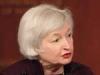
This moment is historic. For the first time in history a woman is nominated to chair the Federal Reserve. Assuming Dr. Janet Yellen does a good job, this alone will help millions of women in finance and economics, which to this day is fraught with gender bias and glass ceilings. She is already inspiring the phrase, Yellenomics and referred to as Bernanke Redux for most perceive the Fed and their policies will not change much in the transition.
The Federal Open Market Committee is not going to stop quantitative easing just yet. This is no surprise considering the weak economic conditions and as we pointed out, an inflation rate below expectations. The risk of deflation is real.
There is a war on social security and America is losing the battle. One constant in the fiscal cliff negotiations is the agenda to cut your retirement benefits by a ruse, a lowering of the inflation adjustment.
Every once in a while we see a piece of data which makes the hair on our heads stand on end. Such is the Census Foreign Trade graph of the month. Below are corn exports and their percent change a year from June 2012.
The more orange a state is, the more their exports declined. Texas corn exports declined a whopping -272.6%, Kansas dropped -160.9%. Arkansas is a real disaster, with a -445.2% drop in corn exports as of June 2012. What's worse is the June data only gives a 10% national drop in corn exports from a year ago. July gave much worse figures.
By July 2012, the United States corn export decline was the lowest in 19 years and had dropped 40% from a year ago according to the latest USDA statistics. The U.S. is the largest exporter of corn and corn is the largest export of course-grains. The below charts are from the USDA grain report.
The Central Banks went on the move. Within 45 minutes of each other, the ECB lowered interest rates, the Chinese central bank did too and the U.K. just enacted more glorified quantitative easing. BoE increased their asset purchases by £50 billion to a grand total of £350 billion.
While it appears we have a global, coordinated plan of attack by Central banks, one might also notice we have a global coordinated plan to counter an economic slowdown. In other words, by all acting in concert, this gives more confirmation that we have a global economic mini-implosion going on.



 There is a war on social security and America is losing the battle. One constant in the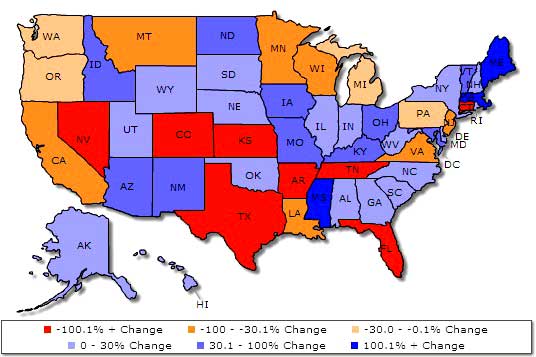
 The Central Banks went on the move. Within
Recent comments