The economy has been debilitated by the offshoring of middle class jobs for the benefit of corporate profits and by the Federal Reserve’s policy of Quantitative Easing in order to support a few oversized banks that the government protects from market discipline. Not only does QE distort bond and stock markets, it threatens the value of the dollar and has resulted in manipulation of the gold price.
Wall Street was all aghast that their quantitative easing was about to disappear. The FOMC decided to taper in January and now stocks soar. Why? Because the taper is minimal and the FOMC announced the federal funds rate will remain an effective zero for much longer than previously estimated.
This moment is historic. For the first time in history a woman is nominated to chair the Federal Reserve. Assuming Dr. Janet Yellen does a good job, this alone will help millions of women in finance and economics, which to this day is fraught with gender bias and glass ceilings. She is already inspiring the phrase, Yellenomics and referred to as Bernanke Redux for most perceive the Fed and their policies will not change much in the transition.
The Federal Open Market Committee is not going to stop quantitative easing just yet. This is no surprise considering the weak economic conditions and as we pointed out, an inflation rate below expectations. The risk of deflation is real.
The Bank for International Settlements has demanded Central Banks stop their quantitative easing in hopes of a global economic recovery. All that has happened is a stock market love affair while the real economy languishes. BIS has issued their annual report demanding nations deleverage, which is codespeak for austerity.
The FOMC just did a great thing. The Federal Reserve tied interest rates and quantitative easing to U.S. labor. The messaging alone is powerful. The Federal Reserve is saying, very clearly, U.S. workers matter. Businesses need to start hiring and increasing wages if they want to actually improve the overall economy.
About 5 million people—more than 40 percent of the unemployed—have been without a job for six months or more, and millions more who say they would like full-time work have been able to find only part-time employment or have stopped looking entirely. The conditions now prevailing in the job market represent an enormous waste of human and economic potential.
More quantitative easing is here. The Federal Reserve will increase purchases of mortgage-backed securities and agency debt by $340 billion by December 31st, 2012. From the FOMC statement:
The Committee agreed today to increase policy accommodation by purchasing additional agency mortgage-backed securities at a pace of $40 billion per month.
The Committee also will continue through the end of the year its program to extend the average maturity of its holdings of securities as announced in June, and it is maintaining its existing policy of reinvesting principal payments from its holdings of agency debt and agency mortgage-backed securities in agency mortgage-backed securities. These actions, which together will increase the Committee’s holdings of longer-term securities by about $85 billion each month through the end of the year
More astounding is the promise to continue to make MBS purchases until the employment rate is acceptable.
If the outlook for the labor market does not improve substantially, the Committee will continue its purchases of agency mortgage-backed securities, undertake additional asset purchases, and employ its other policy tools as appropriate until such improvement is achieved in a context of price stability. In determining the size, pace, and composition of its asset purchases, the Committee will, as always, take appropriate account of the likely efficacy and costs of such purchases.
The Federal Reserve will extend their Operation Twist past the June 2012 deadline and downgraded the economic outlook. Originally Operation Twist was $400 billion in Treasuries that were maturity dates of 3 years of less turned into T-bills with maturity dates of 6 to 30 years.


 The FOMC just did a great thing. The Federal Reserve tied interest rates and
  Welcome to the weekly roundup of great articles, facts and figures. These are the economic and financial finds that made our eyes pop.
  The Federal Reserve will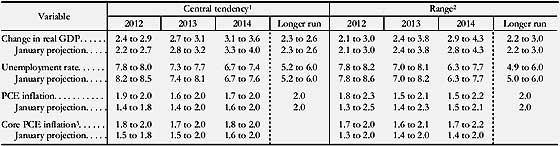
Recent comments